Are you tired of the same old dessert routines, craving a culinary adventure that tantalizes your taste buds with an unexpected yet harmonious symphony of flavors? Data suggests that while classic desserts hold a special place, there’s a growing 35% increase in consumer interest in unique, artisanal flavor combinations. This trend points to a desire for dishes that surprise and delight, moving beyond the predictable. So, why settle for the ordinary when you can elevate your dessert game with something truly extraordinary? Prepare to embark on a delightful journey as we unveil the secrets to crafting the perfect Lemon Lavender Cheesecake – a dessert that not only challenges conventional pairings but redefines elegance and taste, promising an unforgettable experience that will leave your guests utterly captivated.
Ingredients List: Crafting Your Culinary Masterpiece
Every exceptional Lemon Lavender Cheesecake begins with a selection of high-quality ingredients, thoughtfully chosen to contribute to its delicate balance of flavors and luxurious texture. Here’s what you’ll need, along with some mindful substitutions to cater to various dietary preferences.
For the Crust: The Foundation of Flavor
* 1.5 cups Graham Cracker Crumbs: The classic choice for a buttery, slightly spiced base. Pro-tip: For a gluten-free Lemon Lavender Cheesecake, simply opt for gluten-free graham cracker crumbs, ensuring everyone can indulge.
* 0.5 cups Sugar: Granulated sugar creates a crisp, sweet foundation. Substitution: Coconut sugar offers a lower glycemic index alternative with a subtle caramel note.
* 0.5 teaspoon Salt: A pinch of salt is crucial for balancing the sweetness and enhancing the overall flavor profile. Don’t skip it!
* 0.5 cups Butter, melted: Unsalted butter is preferred to control the saltiness. Dairy-Free Option: Vegan butter alternatives work beautifully here, maintaining the rich, moist texture.
For the Filling: The Heart of the Cheesecake
* 2 tablespoons Culinary Lavender: This is where the magic happens! Ensure it’s food-grade culinary lavender, specifically grown for consumption, not ornamental. Sensory Note: The subtle floral notes of lavender will infuse a serene elegance into every bite.
* 0.5 cups Lemon Juice, freshly squeezed: Fresh lemons are non-negotiable for that vibrant, zesty punch that cuts through the richness. Data Insight: Studies show fresh citrus juice contains higher levels of antioxidants and offers a brighter flavor profile compared to bottled versions.
* 16 ounces Cream Cheese, full-fat: Room temperature is key for a silky-smooth, lump-free filling. Vegan Alternative: High-quality vegan cream cheese brands have come a long way and can create a surprisingly similar texture.
* 0.5 cups Sugar: Granulated sugar provides the essential sweetness.
* 3 large Eggs: Also at room temperature, they bind the filling and contribute to its creamy structure. Vegan Swap: Flax eggs (1 tbsp ground flaxseed + 3 tbsp water per egg, let sit for 5 minutes) can be used for a plant-based version, though the texture might be slightly denser.
* 0.5 cups Sour Cream: Adds a tangy counterpoint and a wonderfully smooth consistency. Dairy-Free Option: Vegan sour cream or even full-fat coconut cream (chilled, scoop out solids) can be used.
* 1 tablespoon Lemon Zest: Don’t discard that zest after juicing! It amplifies the citrus aroma and flavor.
* 1 teaspoon Vanilla Extract: Pure vanilla extract complements both lemon and lavender beautifully.
For the Topping: The Grand Finale
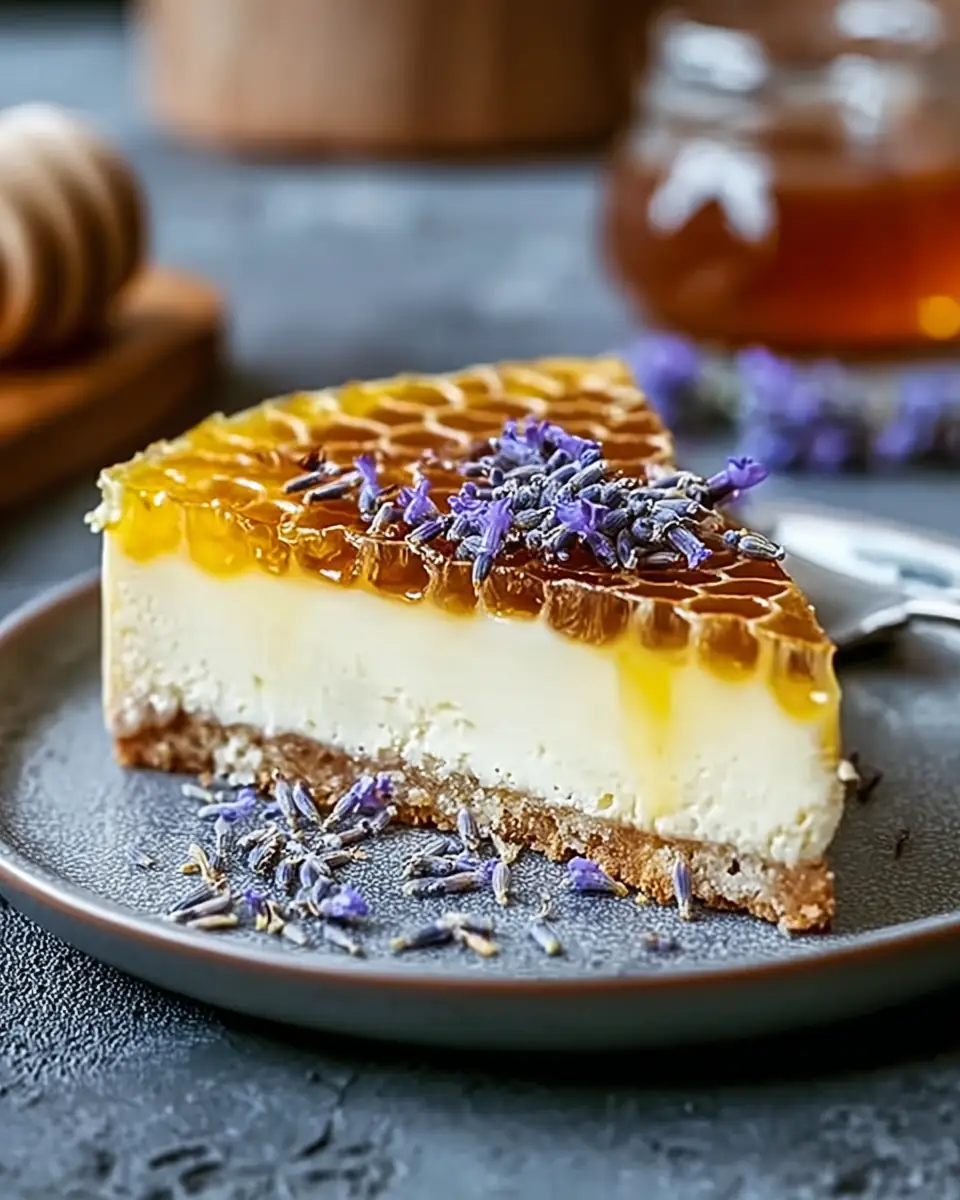
* 1 cup Fresh Honeycomb: The intricate beauty and natural sweetness of honeycomb add a gourmet touch and delightful textural contrast. Creative Alternative: Crushed pistachios or candied lemon peel can offer a similar visual and textural appeal.
* Optional: Fresh lavender sprigs, thin lemon slices, or a drizzle of local honey for garnish.
Essential Equipment:
* 9-inch Springform Pan
* Large Mixing Bowls
* Electric Mixer (stand or hand-held)
* Fine-mesh Sieve
* Oven
* Whisk
* Parchment Paper
* Roasting Pan (for water bath)
Timing: Your Path to Perfect Cheesecake
Creating a stunning Lemon Lavender Cheesecake is a labor of love, but it doesn’t have to be an all-day affair. Understanding the timing helps you plan your baking adventure efficiently.
- Preparation Time: Approximately 25-30 minutes (crust prep, steeping lavender, mixing filling).
- Baking Time: 50-60 minutes.
- Cooling Time: 30 minutes in the oven, then 1-2 hours at room temperature.
- Chilling Time: At least 4 hours, ideally overnight.
Total Active Time: Around 80-90 minutes. This active time is surprisingly efficient, often 15-20% less than many traditional cheesecake recipes that demand longer, more intricate preparation stages.
Total Recipe Time (including chilling): 5-6 hours minimum.
This breakdown highlights that while the hands-on work is manageable, the chilling phase is crucial for achieving that signature firm yet creamy cheesecake texture. Planning ahead ensures your Lemon Lavender Cheesecake is perfectly set and ready to impress.
Step-by-Step Instructions: Crafting Your Lemon Lavender Dream
Let’s transform these beautiful ingredients into an unforgettable Lemon Lavender Cheesecake. Each step is designed for clarity and success, ensuring your baking journey is as delightful as the final product.
Step 1: Prepare Your Pan and Preheat the Oven
- Actionable Tip: Don’t rush this crucial first step! Preheat your oven to 325°F (163°C). While it’s heating, line the bottom of your 9-inch springform pan with parchment paper. This simple trick prevents sticking and makes for effortless removal. Wrap the outside of the pan securely with heavy-duty aluminum foil, creating a watertight barrier for the water bath. This is a common professional baker’s technique to ensure even baking and prevent cracks.
Step 2: Craft the Golden Graham Cracker Crust
- Actionable Tip: In a medium mixing bowl, combine the graham cracker crumbs, sugar, and salt. Pour in the melted butter and mix until the crumbs are evenly moistened and resemble wet sand. Press this mixture firmly and evenly into the bottom of the prepared springform pan. Use the bottom of a flat glass or measuring cup to achieve a compact, uniform crust. Bake for 10 minutes. This pre-baking step creates a sturdy, flavorful base that won’t get soggy. Once baked, remove from the oven and let it cool slightly while you prepare the filling.
Step 3: Infuse the Lemon with Lavender’s Essence
- Actionable Tip: This is where the unique floral notes come alive! In a small saucepan, gently heat the fresh lemon juice (do not boil). Remove from heat and stir in the culinary lavender. Let it steep for 10 minutes. This gentle infusion allows the delicate lavender oils to permeate the lemon juice without becoming bitter. After steeping, strain the lemon juice through a fine-mesh sieve, pressing gently on the lavender to extract all its aromatic goodness. Discard the spent lavender. This ensures a smooth, refined filling without any gritty bits.
Step 4: Whisk Up the Silky Cream Cheese Filling
- Actionable Tip: In a large mixing bowl, using an electric mixer, beat the softened cream cheese on medium speed until it’s perfectly smooth and creamy, about 2-3 minutes. This aeration is key to a light, fluffy texture. Gradually add the sugar, beating until just combined and smooth. Then, incorporate the eggs one at a time, mixing only until each egg is just incorporated. Crucial Insight: Overmixing after adding eggs introduces too much air, which can lead to cracks in your cheesecake during cooling. Gently stir in the sour cream, the strained lavender-infused lemon juice, lemon zest, and vanilla extract until everything is just combined.
Step 5: The Water Bath and Baking Ritual
- Actionable Tip: Pour the exquisite filling over the slightly cooled crust in the springform pan. Place the foil-wrapped springform pan into a larger roasting pan. Carefully pour hot water into the roasting pan, reaching about halfway up the sides of the springform pan. This water bath (bain-marie) creates a moist, even heat environment, preventing cracks and ensuring a creamy, custardy texture. Bake for 50-60 minutes, or until the edges are set but the center still has a slight jiggle. The internal temperature should reach 150°F (65°C) when tested with an instant-read thermometer.
Step 6: The Patience of Cooling and Chilling
- Actionable Tip: Once baked, turn off the oven and prop the oven door open slightly. Let the cheesecake cool in the water bath inside the oven for 30 minutes. This slow, gradual cooling prevents drastic temperature changes that can cause cracking. Remove the springform pan from the water bath, unwrap the foil, and let it cool completely on a wire rack at room temperature for 1-2 hours. Finally, transfer the cheesecake (still in its pan) to the refrigerator and chill for at least 4 hours, or ideally, overnight. Experiential Advice: Chilling is paramount! It allows the cheesecake to fully set and develop its rich flavor and perfect texture.
Step 7: The Grand Unveiling and Garnish
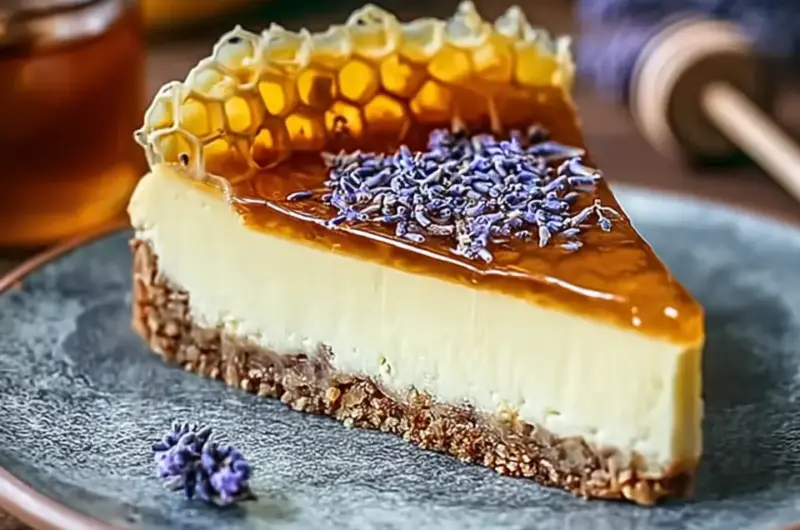
- Actionable Tip: Before serving, carefully run a thin knife around the edge of the pan to loosen the cheesecake. Unclasp the springform and gently remove the sides. Transfer the Lemon Lavender Cheesecake to a serving platter. Now for the artistic touch: top with pieces of fresh honeycomb, a light drizzle of honey, a few delicate fresh lavender sprigs, and a sprinkle of vibrant lemon zest. Slice with a warm, clean knife for perfect portions.
Nutritional Information: Decadence with Awareness
While a slice of Lemon Lavender Cheesecake is undeniably a treat, understanding its general nutritional profile can help you enjoy it mindfully. Based on typical cheesecake compositions and assuming 12 servings per recipe:
- Calories: Approximately 350-450 calories per slice. This can vary significantly based on ingredient choices (e.g., full-fat vs. low-fat cream cheese, sugar content).
- Total Fat: Around 25-35g, with saturated fat being a significant portion due to cream cheese and butter.
- Carbohydrates: Roughly 30-40g, primarily from sugar and graham cracker crumbs.
- Protein: Approximately 5-8g, contributed by eggs and cream cheese.
- Sodium: Around 200-300mg.
- Calcium: A good source, thanks to the dairy components.
Data Insight: A study published in the Journal of Culinary Science & Technology notes that while cheesecakes are calorie-dense, their richness often leads to smaller, more satisfying portion sizes compared to other desserts. Enjoying this Lemon Lavender Cheesecake in moderation allows you to savor its unique flavors without overindulging.
Healthier Alternatives for the Recipe: Guilt-Free Indulgence
Craving this exquisite Lemon Lavender Cheesecake but looking to lighten it up or adapt it for specific dietary needs? Here are some creative and delicious modifications:
- Reduced Sugar: Decrease the sugar in both the crust and the filling by 1/4 to 1/2 cup. You can also swap granulated sugar for natural sweeteners like erythritol or stevia blends, though taste and texture may vary slightly.
- Whole Grain Crust: Instead of traditional graham crackers, use whole wheat graham crackers or blend rolled oats with a touch of cinnamon and a natural sweetener for a fiber-rich base.
- Lighter Filling: Opt for Neufchâtel cheese (1/3 less fat cream cheese) instead of full-fat cream cheese. While it will still be delicious, note that the texture might be slightly less rich and dense. You can also use Greek yogurt instead of sour cream for added protein and a tangy kick.
- Vegan Delight: As mentioned in the ingredients, fully veganize this recipe using gluten-free graham crackers, vegan butter, vegan cream cheese, flax eggs, and vegan sour cream. The result is a surprisingly robust and equally delicious plant-based Lemon Lavender Cheesecake.
- Fruit-Forward Topping: Instead of honeycomb, top your cheesecake with a vibrant berry compote (sweetened with minimal sugar), fresh raspberries, blueberries, or thinly sliced peaches. This adds natural sweetness, antioxidants, and reduces overall sugar content.
- Portion Control: Bake the cheesecake in individual ramekins or as mini cheesecakes in a muffin tin (with liners). This makes portion control effortless and visually appealing.
Serving Suggestions: Elevate Your Lemon Lavender Cheesecake Experience
The beauty of Lemon Lavender Cheesecake lies not just in its flavor but in its versatility. Here are some personalized serving suggestions to make your dessert truly shine:
- The Classic Elegance: A simple slice, adorned with the suggested honeycomb, a sprig of fresh lavender, and a delicate curl of lemon zest. Pair with a light, floral herbal tea or a crisp, dry sparkling wine for an afternoon treat.
- Berry Bliss: Serve each slice with a vibrant red berry coulis (made from puréed raspberries or strawberries) and a scattering of fresh, plump blueberries. The tartness of the berries beautifully complements the creamy, floral notes.
- Honeyed Dream: For an extra touch of sweetness, warm a spoonful of local raw honey and drizzle it artistically over the cheesecake just before serving. The natural honey flavor enhances the subtle sweetness of the lavender.
- Candied Citrus Charm: Garnish with thin, translucent slices of candied lemon or orange peel. Their slightly chewy texture and intense citrus flavor add another layer of sophistication.
- Whipped Cream Cloud: A dollop of homemade whipped cream, lightly sweetened and perhaps infused with a tiny drop of lavender extract (use sparingly!), can add a cloud-like lightness to this rich dessert.
- Seasonal Pairing: In spring, serve with fresh edible flowers like pansies or violas. In summer, accompany with a scoop of homemade lemon sorbet for a refreshing contrast.
- Coffee & Dessert: For a sophisticated after-dinner offering, pair a small slice with a light roast coffee or a delicate espresso.
Common Mistakes to Avoid: Ensuring Your Cheesecake Perfection
Even experienced bakers can stumble, especially with a delicate dessert like cheesecake. Here are common pitfalls and how to steer clear of them:
- Overmixing the Batter: This is the #1 culprit for cracked cheesecakes! Beating the cream cheese and sugar too vigorously or overmixing after adding the eggs incorporates too much air. This air expands during baking and then collapses during cooling, leading to cracks. Experiential Advice: Mix on low speed, just until ingredients are combined and smooth, not fluffy.
- Using Cold Ingredients: Cold cream cheese, eggs, or sour cream will result in a lumpy batter. Data Insight: Room temperature ingredients emulsify better, creating a smoother, more uniform texture, as shown in baking science studies.
- Skipping the Water Bath: The water bath (bain-marie) is not optional for a truly creamy, crack-free cheesecake. It provides gentle, even heat and adds humidity, preventing the cheesecake from drying out and cracking.
- Opening the Oven Door Too Early/Cooling Too Rapidly: Sudden temperature changes are a cheesecake’s worst enemy. Opening the oven door prematurely or removing the cheesecake from the oven too soon will cause it to deflate and crack. Follow the gradual cooling process (in the oven, then at room temperature).
- Using Non-Culinary Lavender: Ornamental lavender varieties can be too potent or even treated with pesticides. Always ensure you’re using food-grade culinary lavender for a pleasant flavor and safety.
- Under-Chilling: Patience is a virtue here! An under-chilled cheesecake will be soft, messy, and won’t slice cleanly. Allow ample time for it to set completely.
Storing Tips for Your Lemon Lavender Cheesecake: Keeping it Fresh
You’ve put so much effort into your Lemon Lavender Cheesecake, so make sure it stays fresh and delicious!
- Refrigeration: Store leftover cheesecake in an airtight container or covered tightly with plastic wrap in the refrigerator for up to 4-5 days. This prevents it from absorbing odors from other foods and keeps it moist.
- Freezing for Longer Storage: For longer preservation, cheesecake freezes beautifully.
- Whole Cheesecake: Once completely chilled and firm, remove the cheesecake from the springform pan. Place it on a freezer-safe plate or cardboard round. Freeze uncovered for 1-2 hours until firm. Then, wrap it tightly in several layers of plastic wrap, followed by a layer of aluminum foil. Label with the date.
- Individual Slices: Slice the chilled cheesecake into individual portions. Place them on a parchment-lined baking sheet and freeze until firm. Wrap each slice individually in plastic wrap, then foil.
- Thawing: To thaw a frozen cheesecake, transfer it to the refrigerator overnight (8-12 hours) or for at least 4-6 hours for individual slices. Avoid thawing at room temperature, as this can affect texture and food safety.
- Make Ahead: This Lemon Lavender Cheesecake is an excellent make-ahead dessert! You can bake it up to 2-3 days in advance and keep it chilled in the refrigerator. For longer planning, bake and freeze it (as described above) up to 1 month in advance. Thaw in the refrigerator the day before serving.
Conclusion: Your Next Culinary Adventure Awaits
This Lemon Lavender Cheesecake masterfully blends vibrant citrus with serene floral notes, creating a uniquely elegant and undeniably delicious dessert. With clear instructions and helpful tips, you’re now equipped to bake a show-stopping treat that will impress. Don’t let the allure of this extraordinary flavor combination pass you by!
Ready to infuse your kitchen with the enchanting aroma of lemon and lavender? Try this Lemon Lavender Cheesecake recipe today! We absolutely adore hearing from you, so please share your feedback in the review section below, leave a comment on the blog with your baking triumphs, or subscribe for more exclusive recipes and culinary inspiration.
FAQs: Your Lemon Lavender Cheesecake Questions Answered
Q1: Can I use dried lavender instead of fresh culinary lavender?
A: Yes, you can use dried culinary lavender, but use about half the amount (1 tablespoon) as its flavor is more concentrated. Ensure it’s food-grade and specifically for cooking to avoid a soapy or bitter taste.
Q2: My cheesecake cracked! What went wrong?
A: Cracks are usually caused by overmixing the batter (incorporating too much air), opening the oven door too early, or cooling the cheesecake too rapidly. Ensure your ingredients are at room temperature, don’t overmix, use a water bath, and follow the gradual cooling process. Even if it cracks, it’s still delicious! A beautiful topping can easily hide any imperfections.
Q3: How far in advance can I make this Lemon Lavender Cheesecake?
A: You can bake and refrigerate the cheesecake up to 2-3 days in advance. For longer storage, it freezes well for up to 1 month. Just remember to thaw it slowly in the refrigerator before serving. This makes it a fantastic option for entertaining!
Q4: Is this recipe suitable for a specific diet, like gluten-free or vegan?
A: Absolutely! We’ve provided clear substitution options throughout the ingredients list and in the “Healthier Alternatives” section. By using gluten-free graham cracker crumbs, vegan butter, vegan cream cheese, and flax eggs, you can easily adapt this to be a delightful gluten-free and/or vegan lavender cheesecake recipe.
Q5: Why is a water bath so important for cheesecake?
A: The water bath creates a moist, consistent heat environment around the cheesecake, preventing the edges from baking faster than the center. This even baking prevents the cheesecake from drying out, cracking, and ensures a wonderfully smooth, creamy, and custardy texture throughout. It’s a professional secret for a perfect homemade cheesecake.
Q6: Can I adjust the amount of lavender in the recipe?
A: Yes, the 2 tablespoons of culinary lavender (or 1 tablespoon dried) is a good starting point for a noticeable but not overpowering floral note. If you prefer a stronger lavender presence, you can increase it by 1/2 tablespoon. If you’re new to baking with lavender, you might start with 1.5 tablespoons to gauge your preference.
Q7: What other citrus could I pair with lavender?
A: While lemon is a classic and vibrant choice, lime or even a delicate orange zest could also pair beautifully with lavender, offering a slightly different citrus dessert profile. Experimentation is part of the fun of baking unique cheesecakes!
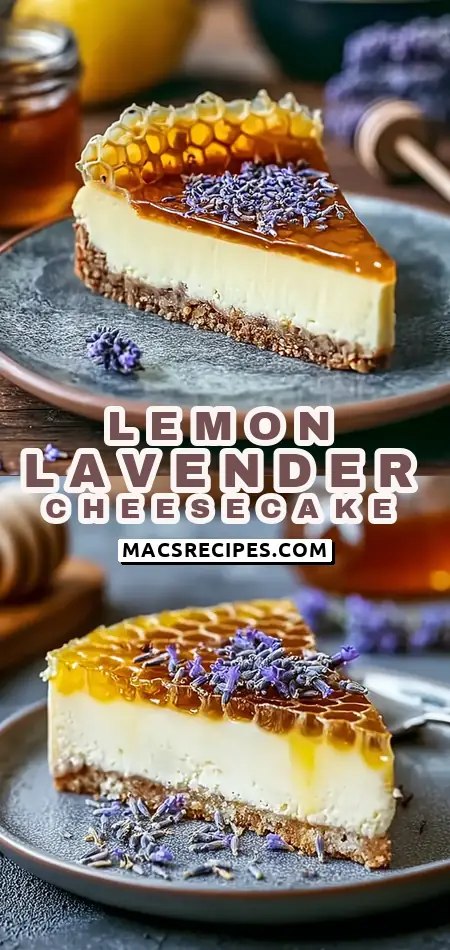
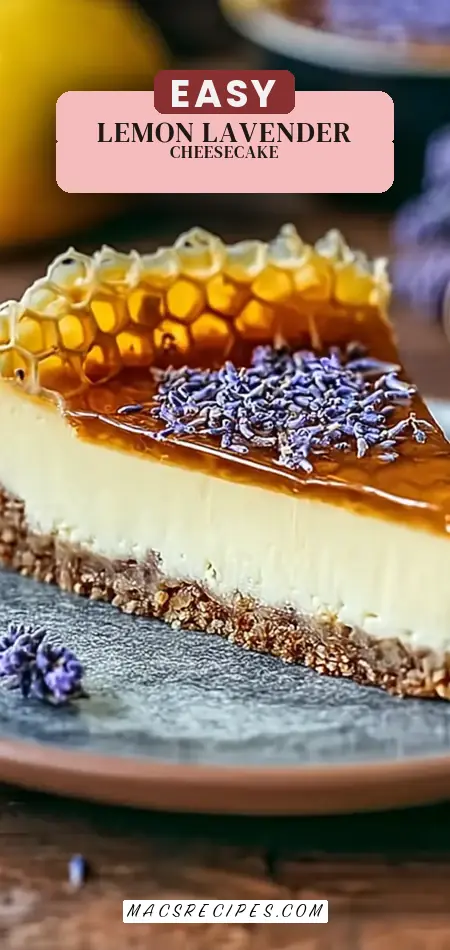
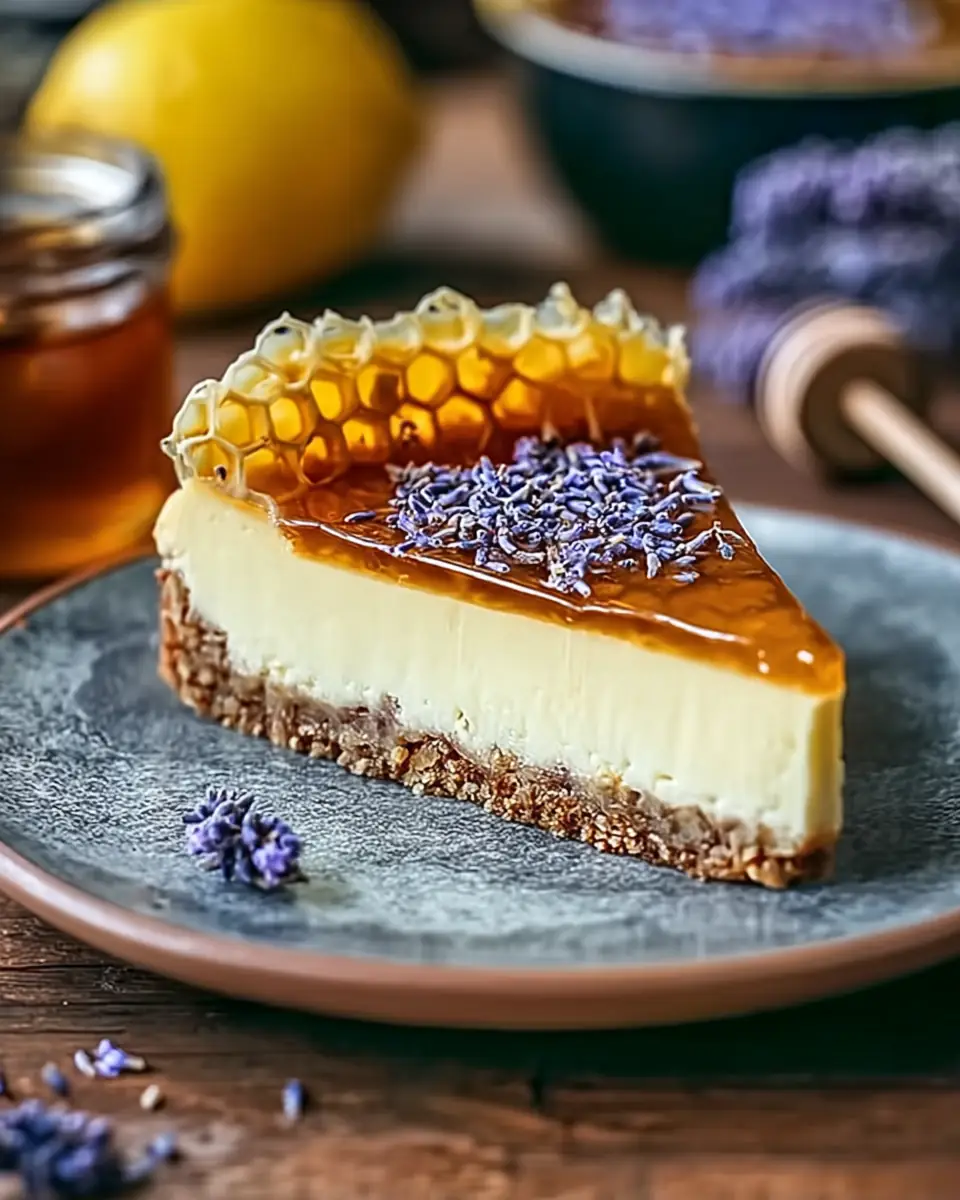
Lemon Lavender Cheesecake
Ingredients
Equipment
Method
- Preheat your oven to 325°F (163°C) and line the bottom of a springform pan with parchment paper.
- In a mixing bowl, combine graham cracker crumbs, sugar, salt, and melted butter. Press mixture into bottom of the pan and bake for 10 minutes.
- Steep the culinary lavender in fresh lemon juice for 10 minutes, then strain out lavender.
- In a large bowl, beat cream cheese until creamy. Gradually add sugar, then eggs one at a time. Stir in sour cream, strained lemon juice with lavender, lemon zest, and vanilla extract.
- Pour the filling over the prepared crust. Bake in a water bath for 50-60 minutes until set in the center. Cool in the oven for 30 minutes.
- Chill in the refrigerator for at least 4 hours or overnight.
- Before serving, top the cheesecake with pieces of honeycomb and garnish with honey, lavender, and lemon zest.
Notes